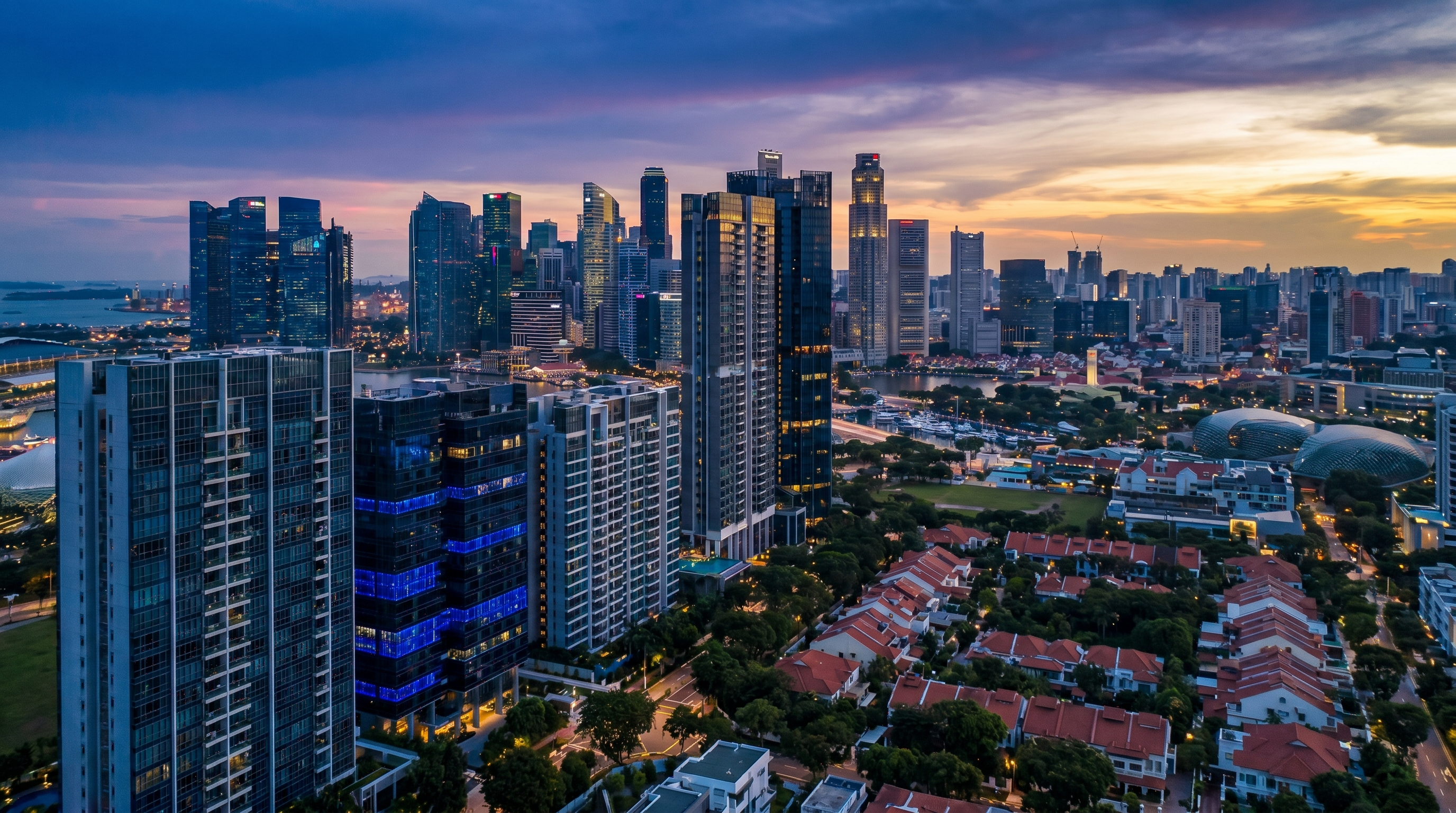
Land supply is climbing just as price growth quietly fades
The Government is placing 4,575 private homes on the Confirmed List for the first half of 2026 — about 50% more than the average Confirmed List supply per programme over the past decade. That is a heavy supply signal arriving at exactly the moment private home prices are losing momentum: URA's flash estimate has the overall index up just 0.7% in Q4 2025, slower than the 0.9% of the quarter before.
GLS Supply (past decade)
2026: 9,320 homes — about 54% above the decade average of 6,060.
| Year | Confirmed-List homes |
|---|---|
| 2016 | 3,730 |
| 2017 | 5,170 |
| 2018 | 5,410 |
| 2019 | 3,740 |
| 2020 | 3,145 |
| 2021 | 3,605 |
| 2022 | 6,290 |
| 2023 | 9,250 |
| 2024 | 10,500 |
| 2025 | 9,755 |
| 2026 | 9,320 |
GLS Confirmed List · private residential (incl. EC) · URA media releases
Add the Reserve List and total GLS supply for 1H2026 comes to nearly 9,200 units — roughly on par with 2H2025. In plain terms: the pipeline of future homes is staying full while demand-side pressure on prices eases.
What URA said: 0.7% growth, a falling prime segment, and ~9,200 units of land
For the whole of 2025, prices rose 3.4%, down from 3.9% in 2024 — the smallest annual increase since 2020. Beneath that headline, the quarter was uneven across segments:
| Segment | Q4 2025 (q-o-q) | Previous quarter |
|---|---|---|
| Overall private residential index | +0.7% | +0.9% |
| Non-landed (all) | −0.1% | +0.8% |
| — Core Central Region (CCR, the prime centre) | −3.2% | +1.7% |
| — Rest of Central Region (RCR, the city fringe) | +0.7% | +0.3% |
| — Outside Central Region (OCR, the suburbs) | +1.0% | +0.8% |
| Landed | +3.5% | +1.4% |
Two things stand out. Non-landed prices actually slipped 0.1% overall, dragged down by a 3.2% fall in the prime CCR, while suburban OCR kept climbing. And landed homes ran the other way, up 3.5%. One national number is hiding very different stories.
A caveat worth keeping: these are flash estimates based on transactions up to mid-December 2025. URA updates them with full data on 23 January 2026, and past flash estimates have differed from the final figures — so read the decimals with caution.
If you're buying, the market is tilting your way — but not everywhere
For a buyer, a slower price index plus a fat supply pipeline is the friendlier combination. Sustained GLS supply could keep a lid on how fast prices run from here, and more launches over the next couple of years may mean more choice and less pressure to overbid. The Government itself is urging households to stay prudent on purchases and mortgages given the uncertain outlook — sensible advice when the direction of prices is flattening rather than surging.
But "the market is cooling" is too blunt to act on. The prime CCR segment fell this quarter while the suburban OCR still rose — so where you're looking matters more than the national average suggests. If you're an HDB upgrader eyeing your first private home, the city-fringe and suburban segments (RCR and OCR) are where the demand — and the price support — has held up. If you're hunting in the prime centre, the recent softness may open a window, but it cuts both ways on resale. None of this is a guarantee of direction; it's a market that's stabilising, not collapsing.
The numbers say location still decides your outcome
The danger of a single 3.4% figure is that it flattens exactly the differences that decide whether a purchase works out. This quarter alone, the gap between the falling prime centre and the rising suburbs was several percentage points. haio's market data shows the same pattern over longer holding periods: returns vary widely by district, and the "best" market is rarely the one in the headline.
District PSF Comparison
Select up to 5 districts to compare
Private condos · yearly median PSF · last 10 years
Top 10 districts by latest median PSF
| District | Latest PSF | 3-yr CAGR | Txns (yr) |
|---|---|---|---|
| D6 | $3,347 | +1.9% | 1 |
| D9 | $3,094 | +6.4% | 696 |
| D2 | $3,029 | +9.9% | 249 |
| D1 | $2,802 | +13.7% | 192 |
| D16 | $2,565 | +18.9% | 1,010 |
| D7 | $2,391 | -2.9% | 80 |
| D3 | $2,352 | +1.8% | 283 |
| D5 | $2,347 | +8.6% | 637 |
| D10 | $2,324 | -3.3% | 397 |
| D21 | $2,268 | -1.3% | 308 |
So before you read a softer index as a green or red light, check what it actually did in the district you care about.
haio's take
This isn't a market to fear or to chase. Price growth at its slowest since 2020, paired with land supply running well above the decade norm, points to a more balanced market where buyers have time and choice on their side — provided you borrow prudently and buy in a segment with real demand behind it. The opportunity isn't "prices are down"; it's that the averages are hiding pockets that are genuinely cheaper and pockets that are still firm.
Don't buy the headline number — buy the district.