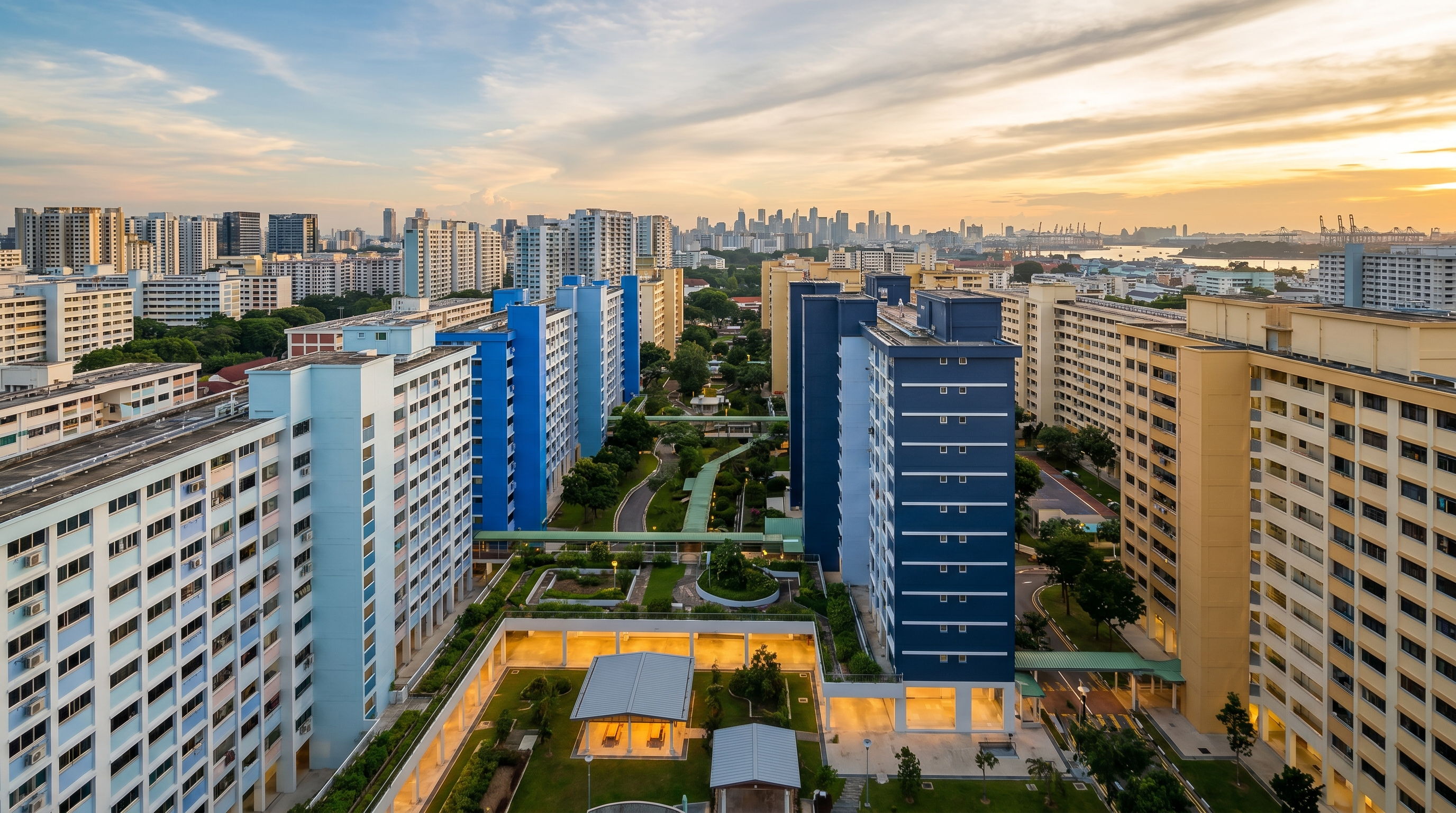
HDB raised S$1.1 billion for a decade — and barely paid for it
The Housing & Development Board has issued S$1.1 billion of 10-year bonds at a coupon of just 2.472% a year, rated Aaa — the highest grade Moody's awards. For an ordinary flat buyer, that one number is worth pausing on: the institution that builds, prices and subsidises most of Singapore's homes can borrow for ten years about as cheaply, and as safely, as any borrower in the country.
This isn't a launch, a grant, or a cooling measure. It's the financial plumbing underneath all of those — and it tells you something about how solid that plumbing is.
What HDB actually did, in plain terms
Strip out the legal language and it's straightforward. HDB sold a batch of bonds — effectively IOUs — to large investors, promising to repay them in 2036 with fixed interest twice a year along the way. It's one drawdown from a much larger S$42 billion borrowing facility the board taps to fund its building works and to refinance older debt.
| Term | Detail |
|---|---|
| Amount raised | S$1.1 billion |
| Instrument | 10-year Fixed Rate Notes |
| Coupon | 2.472% per year (paid semi-annually) |
| Issued | 26 May 2026 |
| Matures | 26 May 2036 |
| Credit rating | Aaa (Moody's) |
| Smallest denomination | S$250,000 |
| Part of | S$42 billion MTN programme |
| Arranging banks | Bank of China, DBS, OCBC, UOB |
Two things to note. First, the rating: Aaa is as safe as a borrower gets, which is why the interest rate is so low. Second, the denomination: at S$250,000 apiece and offered only to institutional and accredited investors, this is not something you can buy at a bank counter. This is HDB's funding, not a retail product.
Why this matters to you, even if you'll never touch the bond
You can't invest in these Notes — but you live inside what they pay for. HDB uses this borrowing facility to finance its development programmes and working capital, and to refinance existing loans. In plain terms: the money that gets BTO projects out of the ground, and that helps keep flats priced below what an open market alone would set, partly comes from raising debt like this.
The fact that lenders will hand HDB S$1.1 billion for ten years at 2.472% points to a low, stable cost of funding for the body behind public housing. That doesn't guarantee cheaper flats — flat pricing is a policy decision, not a direct function of one bond — but a borrower that funds itself this cheaply is under less financial pressure to pass costs on. For a buyer weighing a BTO ballot or an HDB upgrade, that's the quiet reassurance buried in an otherwise dry announcement.
The scale behind the 2.472%
This is one S$1.1 billion slice of a S$42 billion programme — a borrowing engine sized for an institution whose flats house close to 80% of Singapore's resident population, about 90% of whom own their home. That scale is part of why the rating is Aaa and the coupon is low: lenders are backing the body at the centre of national housing, not a speculative developer.
Notice what the release does not contain: a single flat price, a town, or a launch date. So we're not going to dress this up with a resale-price chart it doesn't support — this is a financing story, and the honest read is about HDB's cost of capital, not next quarter's PSF.
haio's take
Don't read this as a bond you missed out on — at S$250,000 a unit and institutions-only, it was never yours to buy. Read it as a health check on the system you are buying into. An Aaa rating and a sub-2.5% ten-year coupon say the financial foundation under Singapore's public housing looks steady, which is one less thing for a flat buyer to worry about. The variable you actually control isn't HDB's borrowing cost — it's yours. Before you ballot or upgrade, pin down exactly what you can afford on your own income and loan.
Check your affordability with haio →